


JSwipe – Jewish Dating & Love
3.11.45K Reviews
App Specs
- Version
- 4.6.11
- Updated On
- License
- Free
- Downloads
- 500,000+
- Developer
- JSwipe
- Categories
- Lifestyle
- Platform
- Android
Screenshots






 Analysis by AppCompare
I approached JSwipe as a practical dating app rather than treating its identity-focused concept as a guarantee of better matches. It is a free lifestyle app from JSwipe, aimed at Jewish singles and available to people in more than 70 countries. That gives it a clear purpose from the start: instead of placing every dating preference into one enormous pool, it tries to make Jewish dating the central context.
My overall impression is mixed but useful. The focused audience can make conversations feel more relevant, especially for someone who wants shared cultural or religious background to matter early. At the same time, a focused dating pool is only helpful when there are enough suitable people nearby, and that can vary greatly by location, age group, and dating goals. I would not recommend installing it simply because it is free. I would recommend trying it when Jewish identity is genuinely important to the kind of relationship you want.
How the free access and paid value fit together
The basic app is free to install, which makes testing the experience relatively straightforward. You can decide whether the available community feels relevant before committing money. That matters more here than it might with a general-purpose dating app because the usefulness of JSwipe depends heavily on your local pool and on how closely other users’ expectations match your own.
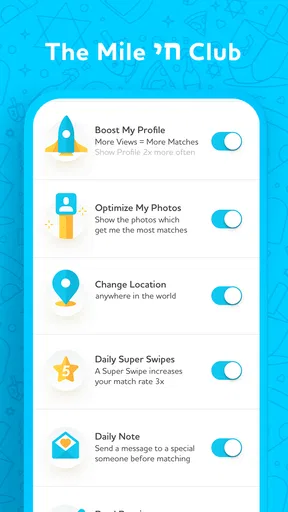
There are in-app purchases ranging from $1.99 to $119.99 per item. That is a wide range, so I would treat every optional purchase as something to evaluate carefully rather than assuming that paying automatically improves your chances of finding a compatible person. The free entry point is the clearest value: it lets you inspect the audience and learn whether the app fits your routine without an upfront purchase.
I would also avoid judging the app by the most expensive option alone. A higher-priced item can only be worthwhile if it solves a problem you actually have, such as needing more control or visibility in your own use of the service. If your local selection is small or the conversations are not promising, spending more will not fix the underlying mismatch. In that situation, keeping the free version or moving to another service is the more sensible choice.
The app is intended for mature users aged 17 and over. That age classification is important for expectations: this is not a casual social network for everyone, and I would approach conversations with the same caution I use on any dating platform. A free download should not be confused with a risk-free experience, particularly when meeting people who are strangers offline.
The experience is strongest when identity is part of your filter
The main value is not just the ability to swipe through profiles. It is the chance to begin with a shared point of reference. For me, that changes the opening stage of dating. Instead of explaining why Jewish holidays, family traditions, community life, or cultural habits matter, a user may be able to start from that common ground and move more quickly toward personal compatibility.
Worth Reading Before You Choose

EA SPORTS FC Mobile 26 Is a Bigger Football Game, but It Takes Time

Flipboard Shows What News Apps Must Do Beyond the Feed

Switching to Android Auto Means Rethinking Your Driving Routine

Google Calendar Makes a Crowded Week Easier to Manage

Ludo King Makes the Most of the Minutes Between Plans

Baby Panda World Brings Quick Play to Modern Phones, but Its Game Library Feels Busy
That does not mean every match will share the same level of observance or want the same kind of relationship. Jewish identity can mean different things to different people, and that is one of the app’s most important trade-offs. The label narrows the audience, but it does not remove the need to ask thoughtful questions. I would still clarify whether someone is looking for a serious relationship, casual dating, marriage, community connection, or simply conversation.
A useful everyday scenario would be a person who has recently moved to a city and wants dating to connect with cultural belonging. On a general dating app, they may need to filter through many profiles before discovering whether Jewish life is meaningful to a potential match. With JSwipe, that subject is more likely to be relevant from the beginning. The benefit is not that every interaction becomes successful; it is that the first screening step may feel less random.
Another realistic use case is someone who has tried broad dating services but repeatedly found that religious or cultural compatibility became a difficult issue later. This app can move that consideration earlier in the process. That can save time, but it can also make the experience feel narrower. If you enjoy meeting people from very different backgrounds and prefer to discuss identity only after a connection forms, a general dating app may suit you better.
What I would check before paying for anything
I would spend time observing the free experience before considering an in-app purchase. First, I would look at whether the profiles available to me are geographically practical. A large international reach sounds useful, but dating is usually shaped by travel distance, relocation plans, and willingness to maintain a long-distance connection. A person in a large Jewish community may have a very different experience from someone in a smaller town.
Second, I would pay attention to the quality of the conversations rather than the number of profiles. A smaller group with clear intentions can be more valuable than a busy feed full of people who never respond. I would also notice whether profiles provide enough context to start a respectful conversation. If I repeatedly feel that I am making decisions with too little information, paying for additional access would not be my first solution; I would first reconsider how well the app fits my needs.
Third, I would set a personal spending limit before browsing purchase options. The available items begin at a low price but extend to a much higher level, and dating apps can encourage impulse decisions when a match feels promising or when activity seems slow. I prefer to use the free access long enough to identify a specific problem, then decide whether a purchase addresses that problem. If I cannot name the problem clearly, I would skip the purchase.
This approach also answers a common concern: can someone use the app without paying? Yes, the app itself is free, so you can try its basic experience without buying an item. Whether the free access is sufficient for your goals depends on your location, the people you find, and how much control you want. I would not pay simply to make the app feel more active unless the purchase offers a benefit that is meaningful to my particular situation.
Where the focused approach creates friction
The same focus that makes JSwipe distinctive can make it limiting. A dating service built around a specific community naturally offers fewer possibilities than a broad service in some areas. That is not automatically a flaw, but it means the app may become repetitive if your local audience is small. You may see fewer genuinely new possibilities, or you may find that the people available do not match your preferred age, distance, or relationship direction.
There is also a risk of assuming that shared identity equals shared values. It does not. Two people can both identify as Jewish while having very different expectations about faith, family, lifestyle, politics, geography, or commitment. I would use the shared background as an opening for conversation, not as a shortcut around compatibility. The app can help establish a relevant starting point, but it cannot do the deeper work of deciding whether two people fit.
The rating gives a useful signal that the experience is not universally loved: it sits at 3.1 from around 7.8 thousand ratings, alongside about 1.4 thousand written reviews. I would not treat that score as a final verdict, because dating apps are highly personal and local activity can change the experience. Still, it supports a cautious approach. I would install it as a trial, not as my only dating strategy.
The app has passed half a million installs, which suggests that it has reached a substantial audience without making it a guarantee of strong activity in every region. Its current version is 4.6.11 and it works on Android devices running version 5.1 or later. Those details make it accessible to people using older compatible phones, but the practical question remains whether the service feels active and relevant where you live.
I also think the international positioning needs a realistic interpretation. Being available across more than 70 countries can help people who travel, relocate, or are open to meeting someone abroad. It does not necessarily mean that every country has a deep local community. If you are only interested in meeting someone within a short commute, I would judge the app by nearby profiles rather than by its global reach.
How it compares with general dating alternatives
Compared with a large general dating app, JSwipe offers a more defined starting point. A broad service usually gives you a larger and more varied pool, which is better if you want maximum choice or if you live outside a strong Jewish community. The downside is that you may spend more time discovering whether a person shares the background and priorities that matter to you.
Compared with a highly formal matchmaking service, JSwipe feels more immediate and self-directed. You can make your own decisions instead of waiting for a structured introduction, but that also means you carry more responsibility for screening, communication, and safety. Someone who wants personal control may prefer that. Someone who wants guided introductions or a more deliberate process may find a different type of service more comfortable.
It can also sit alongside, rather than replace, other dating options. I would not put all my expectations into one app. Using JSwipe for culturally relevant connections while keeping a general service for a wider pool can make sense, provided you can manage the time and conversations without becoming overwhelmed. If maintaining multiple profiles feels tiring, choose the service that best matches your actual priority instead of trying to maximize every possible match.
Who is most likely to get real value
I see the strongest fit for Jewish singles who want cultural or religious identity to be visible early in the dating process. It may also suit people who have moved away from a familiar community and want dating to overlap with a sense of belonging. The focused setting can reduce the need to explain why certain traditions or family expectations matter, even though meaningful questions are still necessary.
It is also worth trying if you are open to international connections or relocation. The broad country coverage gives that kind of user a reason to look beyond a single neighborhood. I would still discuss distance and practical plans early, because a promising conversation can become frustrating when neither person has a realistic way to meet.
I would be more hesitant to recommend it to someone who wants the largest possible dating pool, dislikes identity-based filtering, or lives in an area where nearby activity is limited. It is also not the best choice for a person who expects a shared label to guarantee shared observance or relationship goals. In those cases, a general app may provide more variety, while a more guided matchmaking option may provide more structure.
For a first-time user, my practical routine would be simple: create a profile that explains what Jewish identity means to you, avoid presenting it as a vague checkbox, and use early conversations to clarify intentions. I would not hide important expectations until after meeting. At the same time, I would avoid turning the profile into a list of requirements. The app works better as a way to find relevant starting points than as an automatic compatibility test.
My buy-or-skip verdict
I would try JSwipe for free if Jewish dating is a meaningful priority and I had enough local or travel flexibility to benefit from a focused community. The free access makes that trial reasonable, while the range of optional purchases means I would keep spending conservative until the app proves useful in my own area. I would not recommend buying the most expensive item simply because the free experience feels slow.
My verdict is therefore a qualified recommendation, not an enthusiastic endorsement for everyone. The app has a clear identity, a potentially valuable cultural focus, and an international audience. Its weaknesses are equally clear: local activity may vary, shared identity does not equal compatibility, and the modest average rating suggests that some users encounter friction.
JSwipe is worth testing when cultural relevance matters more to you than having the biggest possible pool. If the free experience produces nearby profiles, respectful conversations, and people whose relationship goals resemble yours, an optional purchase may be worth considering for a specific reason. If it does not, I would skip spending and return to a broader dating alternative. In my view, the app’s value comes from better context at the beginning—not from paying more, swiping longer, or assuming that a shared background does all the work.
Pros
- Designed for Jewish singles seeking culturally compatible matches.
- Simple swipe-based interface makes browsing profiles quick and familiar.
- Useful filters can help narrow matches by location and preferences.
- Profile prompts make it easier to start conversations with shared interests.
- Available on both Android and iOS devices.
Cons
- Smaller user pool outside major cities or areas with Jewish communities.
- Some useful features require a paid subscription or in-app purchases.
- Match quality depends heavily on how completely users fill out profiles.
- Inactive or infrequently used profiles may still appear in discovery.
- Users should remain alert for fake profiles and dating scams.
FAQs for JSwipe – Jewish Dating & Love
What is JSwipe – Jewish Dating & Love?
JSwipe is a dating app designed primarily for Jewish singles who want to meet people with shared cultural, religious, or family values. After creating a profile, you can browse potential matches, indicate interest, and start conversations when there is mutual interest. The app may also be used by people interested in Jewish dating, even if they have different levels of religious observance.
How does matching and messaging work on JSwipe?
JSwipe generally uses a swipe-based matching system. You review profiles, photos, and personal details, then swipe to show whether you are interested. Messaging is normally available after both users express mutual interest, helping reduce unwanted conversations. Before engaging, it is worth reading the complete profile, checking for consistent information, and remembering that responses and match quality depend on the activity of users in your location.
Is JSwipe free to download and use?
JSwipe can typically be downloaded without an upfront charge, and basic dating features may be available for free. However, some functions can be limited or placed behind optional subscriptions or in-app purchases, such as seeing additional likes, improving profile visibility, or accessing advanced preferences. Pricing and available features may change, so review the current terms in the Google Play Store or Apple App Store before subscribing.
Is JSwipe suitable for all Jewish singles and levels of observance?
JSwipe is intended to serve a broad Jewish dating community, including users with different backgrounds, traditions, and levels of religious observance. Profiles may include information about identity, location, interests, and lifestyle, but not every user will have the same expectations about relationships or faith. Be clear about what matters to you, including religious practice, long-term goals, and family values, before meeting someone.
What safety precautions should I take when using JSwipe?
As with any dating platform, you should protect your privacy and take time to verify a person’s identity through natural, respectful conversation. Avoid sharing your home address, financial information, passwords, or sensitive documents. Report suspicious behavior, pressure, harassment, or requests for money through the app’s available tools. For a first meeting, choose a busy public place, tell a trusted person where you are going, and arrange your own transportation.


